[phone] [email]
Let's Talk
The Lab

Where window claims meet controlled conditions.

Every opinion Jimmy Cruz offers as a consultant is backed by the same apparatus you see here — a working, accredited fenestration test laboratory where products are pressurized, sprayed, loaded, and measured against the letter of the standard.

Discuss a Test Program
The Work, Documented

From bare specimen to defensible data

A valid test result starts long before water hits glass. These photos follow the parts of the process most people never see — the fixturing, sealing, and instrumentation that make a result stand up to scrutiny.

01 · Fixturing

Custom specimen stands, built to the unit

Full-size windows and doors don't arrive ready to test.
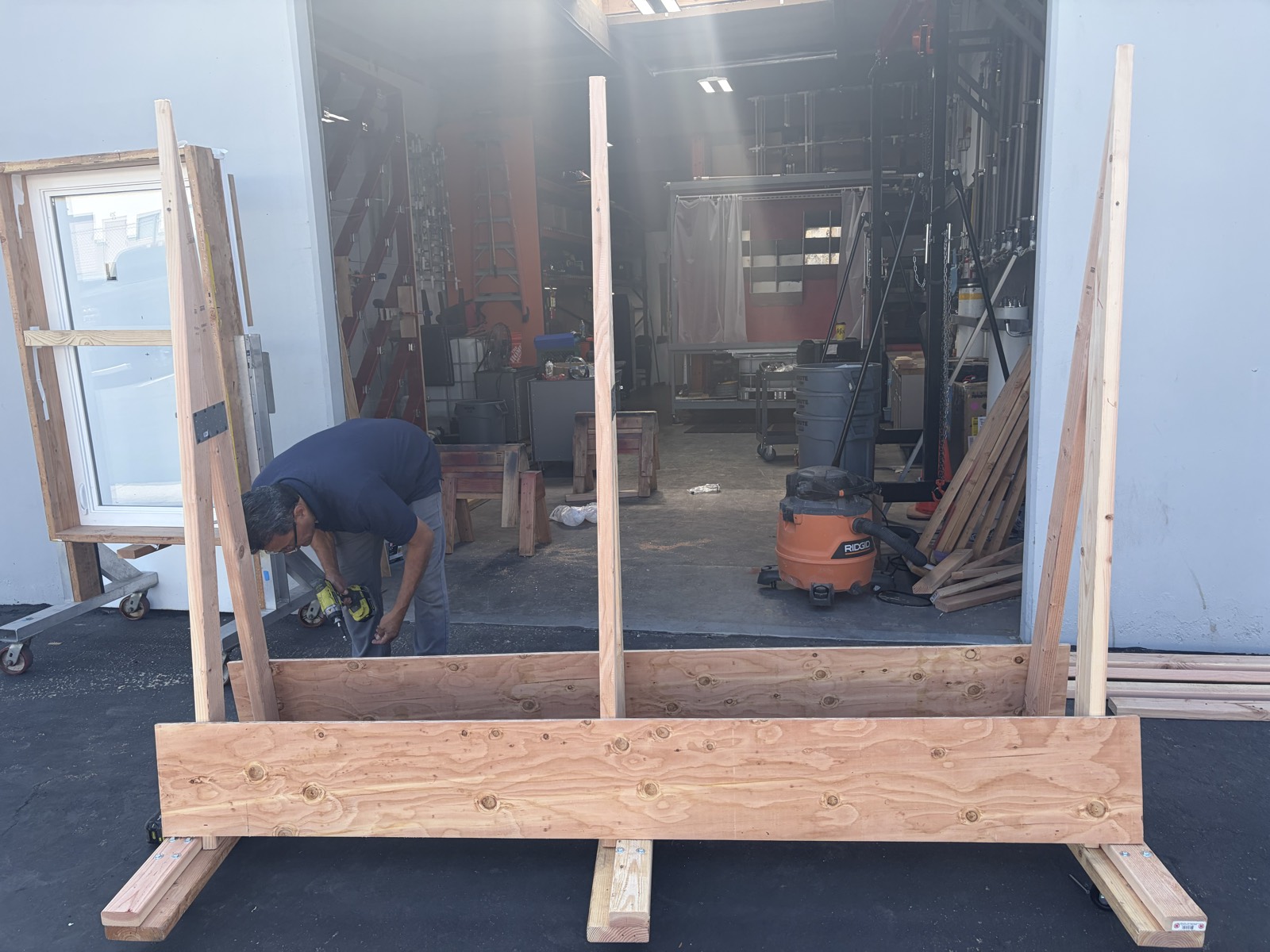
Jimmy Cruz assembling a custom wooden specimen stand outside the test bay, with a window unit staged on a cart
Building a dedicated stand so the specimen is handled, stored, and mounted without stressing the frame

Each specimen gets purpose-built support — because a unit racked or twisted in handling will fail a test for reasons that have nothing to do with the product. Proper fixturing protects the integrity of the result in both directions.

02 · Chamber Prep

Sealing the test wall airtight

The chamber, not the window, must be the tightest thing in the room.
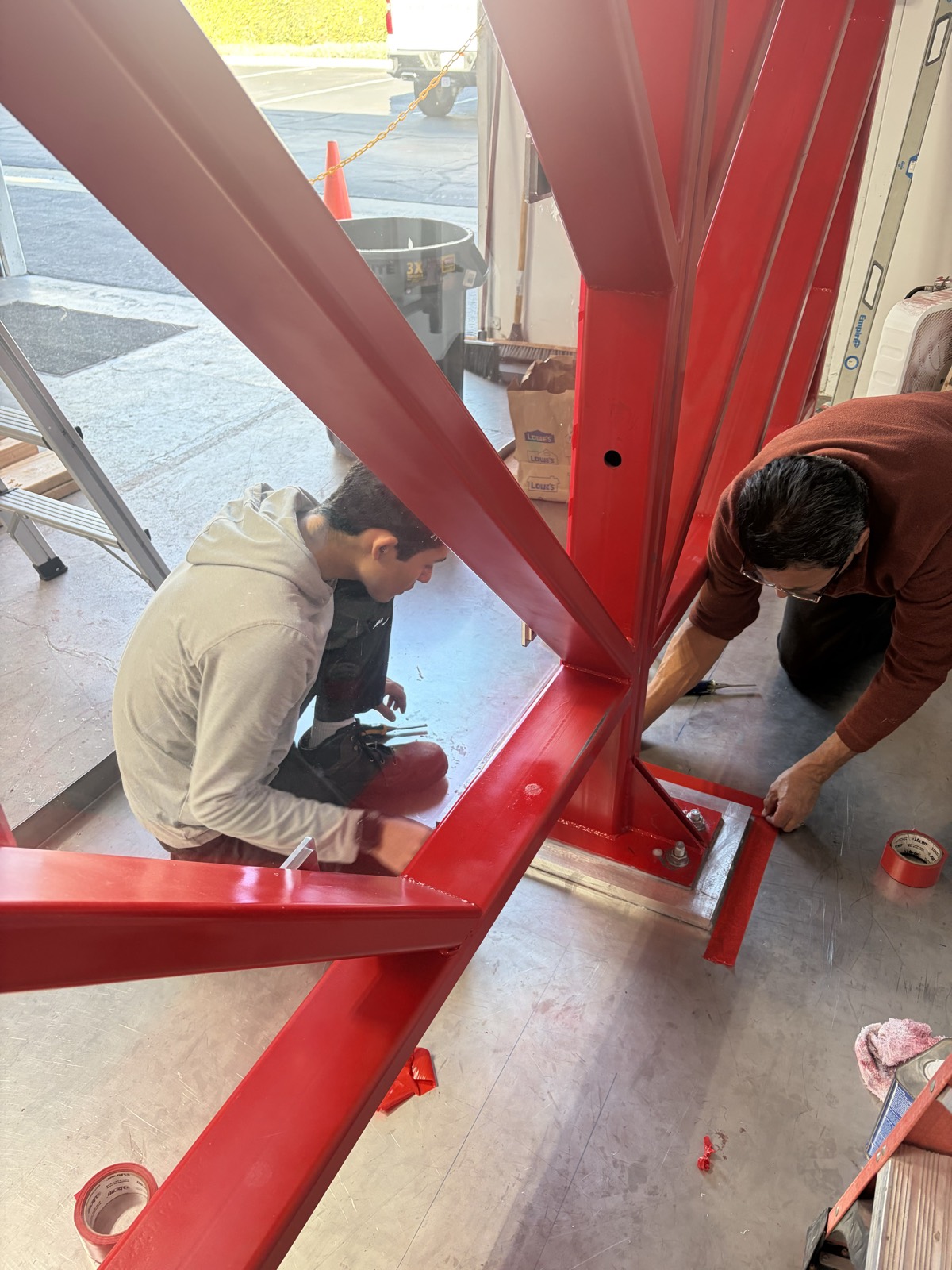
Two technicians taping and sealing the base plates of the red steel pressure test wall
Taping and sealing the buck's base plates — any chamber leakage would corrupt the air-infiltration numbers

Air-leakage tests (ASTM E283/E783) measure cubic feet per minute through the specimen. If the chamber itself leaks, the data is meaningless — so every joint, anchor, and penetration in the steel test wall is sealed and verified before a specimen is ever measured.

03 · Mounting

Specimen installed as it would be in the wall

Tested the way it's used — not the way it's convenient.
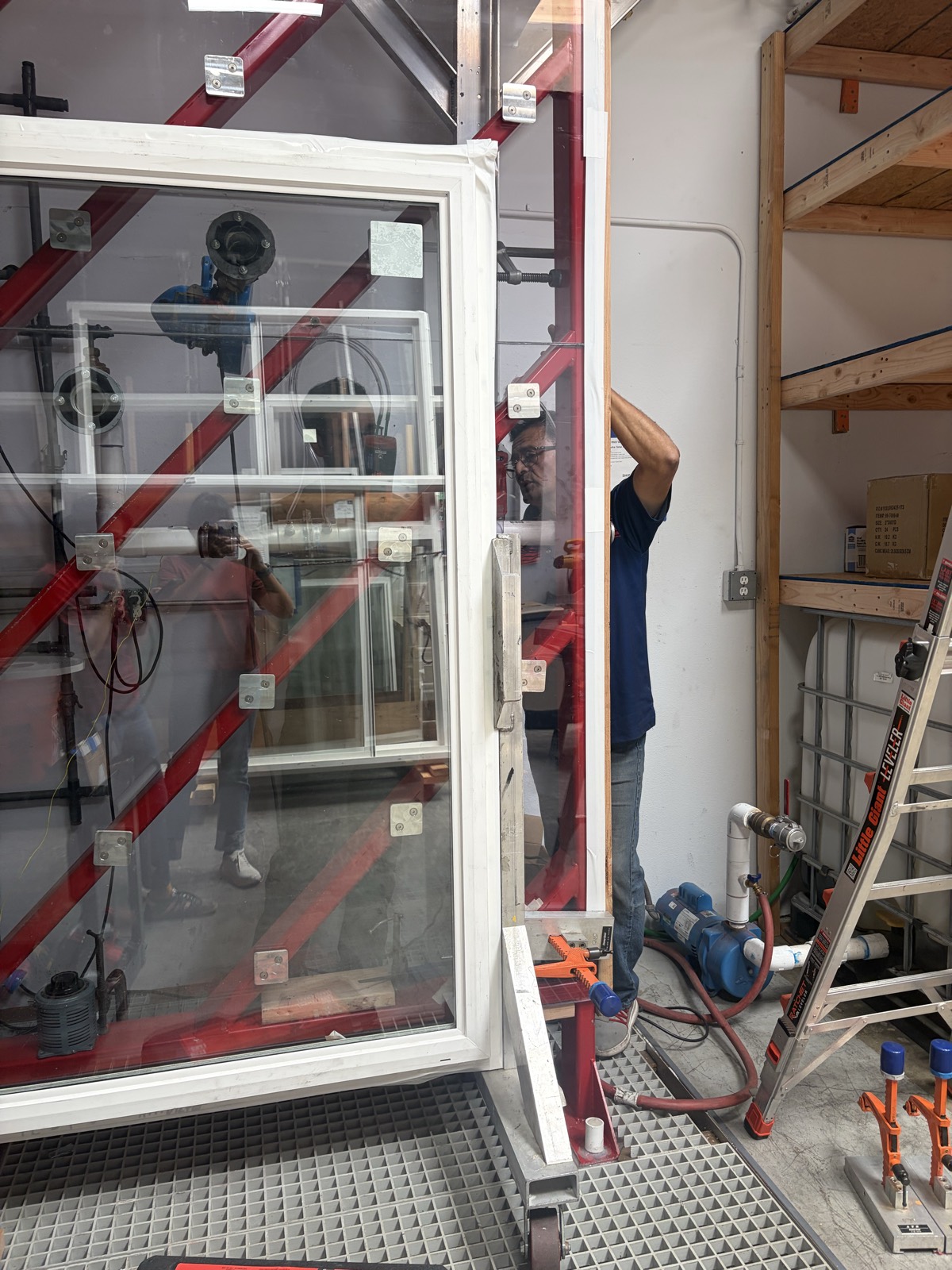
Jimmy Cruz positioning a single-hung window specimen in the red pressure test wall, with water supply pump and hoses plumbed at right
Setting a single-hung unit into the pressure wall; the calibrated water supply is plumbed and ready at right

The specimen is installed into the buck per the manufacturer's instructions, perimeter-sealed, and instrumented. The spray rack delivers water at the calibrated rate the standard demands (5 gal/ft²·hr for ASTM E331/E1105) while static pressure simulates wind-driven rain.

04 · The Facility

A working lab, not a prop

Chain hoists, spray manifolds, pressure chambers, calibration records.
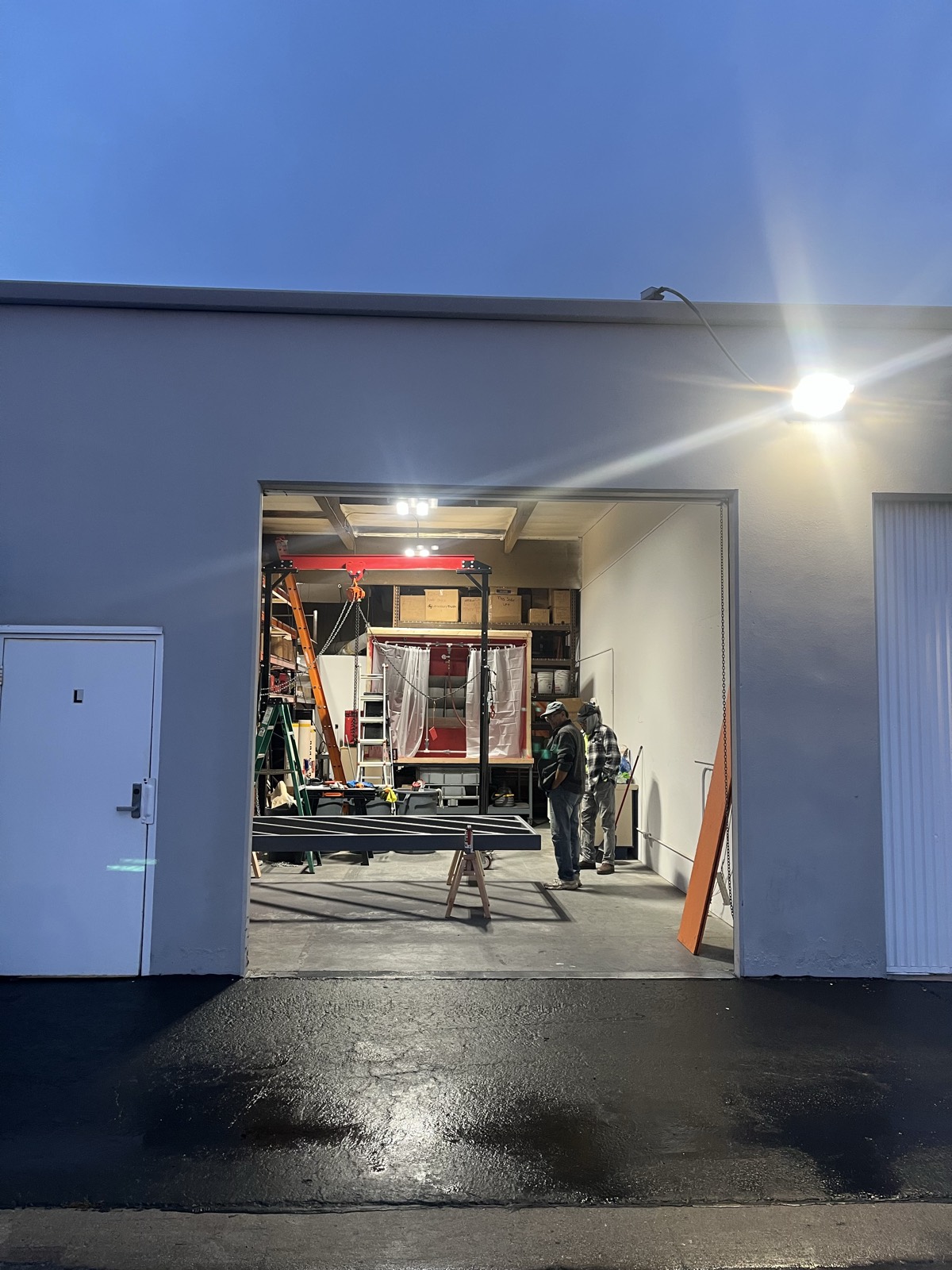
The test bay at dusk, seen from outside: gantry crane, curtained pressure chamber, and technicians reviewing the day's setup
The test bay at the end of a test day — gantry, chamber, and the next morning's specimen already staged

This is the environment Jimmy works in every week: an accredited laboratory [confirm accreditation body/scope] with the rigging, instrumentation, and documentation discipline that certification testing requires — and that forensic work deserves.

What This Makes Possible

If it can happen to a window, it can be reproduced here

Air infiltration

ASTM E283 (lab) / E783 (field) — quantified leakage under controlled pressure differentials

Water penetration

ASTM E331 / E547 / E1105 — calibrated spray under uniform or cyclic static pressure

Structural load

ASTM E330 — uniform load deflection and proof testing to design pressure

Certification programs

NAFS (AAMA/WDMA/CSA 101/I.S.2/A440) performance-grade testing

Forensic re-creation

Reproduce a disputed field failure under documented, controlled conditions

Litigation mockups

Test protocols designed for evidence: photo logs, calibration records, chain of custody

Have a product to prove — or a failure to reproduce?

Tell Jimmy what the question is; he'll tell you which test answers it and what the result will mean.

Let's Talk